
Why Your Back Pain Keeps Coming Back After Massage or Physio – And What to Do About It
- Physology

- Feb 1
- 5 min read
Updated: Feb 2

Before we begin, we have a more comprehensive Back Pain Guide on our website that outlines our exact approach and is relevant to those seeking treatment. This blog article is intended for a global audience, including individuals who are unable to attend a treatment with Physology, and provides general advice.
Read our Back Pain Guide Here if you are considering treatment with Physology, as it provides more details about our treatment and how we can help you achieve pain-free results. If that's not you, then read on and please enjoy this article.
Why Your Back Pain Keeps Returning
If you’ve had a massage, physio, or even painkillers for back pain and the ache returns a few days or weeks later, you’re not imagining things — and you’re not alone.
Most people in Bath and Bristol go through the same cycle: the treatment feels good at first, the tightness eases, you get a bit of hope… then the pain creeps back, often in the same spot, and you’re left wondering what you’re doing wrong.
You’re not doing anything wrong. You’re just treating part of the problem — and the part that keeps it coming back is usually hidden deeper.
Let’s talk about why this happens, and why catching it now (while you’re still early in the journey) can make all the difference.

Why Back Pain Relief Often Doesn’t Last
Massage, physio, exercises, and painkillers are all smart first steps — they help millions of people feel better in the moment. They relax tight muscles, reduce inflammation, improve movement for a while, and give you a break from the ache.
But for so many, the relief fades. The same stiffness returns, the ache flares up after sitting too long or bending the wrong way, and the cycle starts again.
Here’s what’s usually going on:
Most treatments focus on the muscle or joint level—loosening knots, strengthening weak areas, or reducing inflammation. That works great short-term.
But your muscles are wrapped and connected by Fascia — a continuous web of connective tissue that runs throughout your body like long ropes. Fascia isn’t just “packaging” — it’s the body’s main force-transmission system.
When Fascia becomes restricted (from years of sitting, repetitive movements, old injuries, or even stress), it thickens, dehydrates, and forms adhesions. This creates uneven tension that pulls muscles and joints back into old, dysfunctional patterns — even after the muscle itself has been treated.
It’s like loosening a knot in a rope but leaving the rest of the rope tangled — the knot re-forms.
That’s why the pain keeps coming back: the muscle relaxes, but the Fascia underneath is still holding everything in the same tight, unbalanced position.

You’re Still Early In Your Back Pain Journey– And That’s Your Biggest Advantage
The good news? If you’re still in the phase of trying back massage, physio for back pain, or painkillers, and the relief isn’t sticking, you’re actually in the best possible place — early.
Most people don’t find us until 5–10 years later, when the restrictions have become deep-set, patterns are locked in, and pain feels chronic or “just part of getting older”. By then, it takes longer (and more sessions) to fully unwind.
But when you’re still early, those fascial restrictions are usually much easier to release. The body hasn’t built years of compensation around them yet.
That means faster progress, fewer sessions, and a much better chance of stopping it from becoming a long-term issue.
Fascia - The Missing Link for Back Massage Treatments
Physio and massage are both excellent tools. They strengthen weak areas, release muscle tension, improve blood flow, and calm inflammation. For short-term flare-ups or general tightness, they often do exactly what you need.
But...
Your muscles don’t exist in isolation. They’re wrapped, supported, and connected by Fascia — a single, continuous sheet of connective tissue that runs from your feet to your skull. Think of it as the body’s internal guy-wires: it holds everything in place and transmits force when you move.
Over time — from sitting too much, repetitive bending, old sports injuries, or even emotional stress — small restrictions form in the fascia.
These restrictions create pulling patterns that travel along lines of tension (research calls them myofascial chains or Anatomy Trains).
When the fascia stays restricted:
Muscles are forced to work harder to compensate
Tension builds upstream and downstream
The body adapts by laying down more protective layers
The original pain pattern gets “locked in”
That’s why the relief from physio or massage fades so quickly: the muscle gets treated, but the deeper fascial tension that keeps recreating the problem is left untouched.
Why Early Back Pain Treatment Changes Everything
The single biggest advantage you have right now is timing.
Most people wait until the pain has been around for 5, 10, or even 20 years before they find a method that addresses the fascial layer. By that point, the restrictions are much thicker, the compensatory patterns are more ingrained, and the body has built a lot of “armour” around the original problem. It can still be helped, but it takes longer and requires more sessions.
When you act earlier — while the restrictions are still relatively soft and the body hasn’t fully adapted around them — change happens faster and lasts longer. The fascia is more pliable, the patterns less entrenched, and the nervous system hasn’t wired in chronic guarding.
How Physology Breaks the Returning-Pain Cycle
We start by listening — really listening.
Your first session includes a full history (when it started, what makes it better or worse, previous treatments) and an in-depth postural and movement assessment.
We’re addressing the fascial restrictions driving the tension, not just the sore spot.
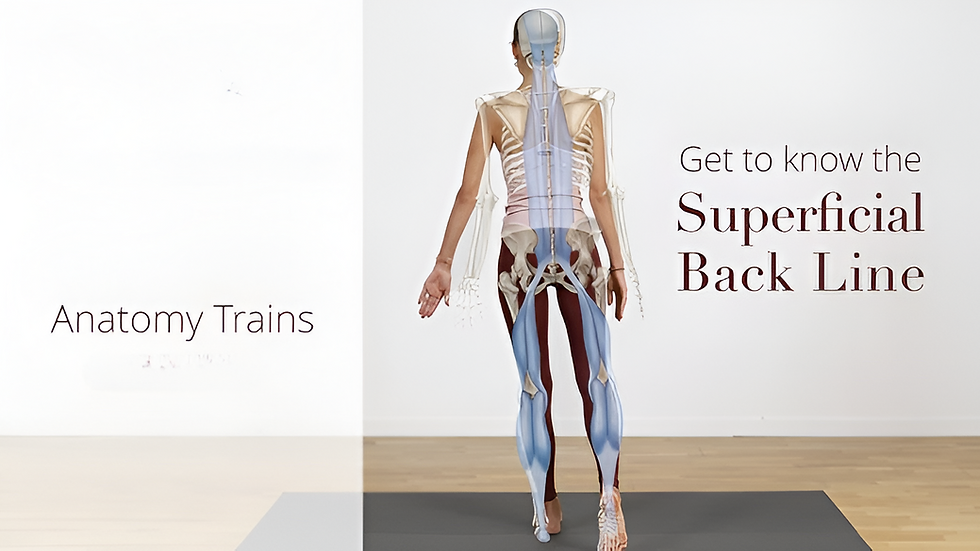
From there, we use the Anatomy Trains map — a research-backed model of how tension travels through connected lines in the body — to develop a treatment plan that targets the root cause rather than just the symptom.
Because we work along the Anatomy Trains lines and release in the right order, the whole system lets go more completely — and stays more balanced for much longer.
Ready to Stop the Loop?
If your back pain keeps returning after massage or physio, you’re still early — and that means you can stop it before it becomes a permanent part of life.
Book your Physology session in Bath today — and let’s catch the real cause while it’s still easy to unwind.
Related Reading


Comments