
The Physology Method: Pain-Free Results for Fibromyalgia, Back Pain & Chronic Pain.
- Physology

- Nov 2, 2025
- 5 min read
Updated: Jan 25

Physology, offering Fibromyalgia Pain treatment in Bath & Bristol – Fascia based Specialists in Chronic Pain, Fibromyalgia, and Long-Term Pain. Using Myofascial Release Techniques
It can be frustrating in Traditional Healthcare when your Physio offers no real plan of how they will help you. Scan results show nothing, or give you a label that leaves you at a dead end. They are unsure what is actually wrong, and every session feels like trial and error. Medication or surgery is the only direction.
It's a real contrast to Physology.
In your assessment, we'll help you understand your exact symptoms, the root cause, and the chain of events leading to your current pain—from your very first issue years ago, to now. Educating you as to how pain has spread through your body. We teach you everything and then give you a clear plan of action from day one.
In fact, most clients leave the consultation with their pain reduced so much that they already know they can become pain-free once they start the treatment plan.
Physology is the science of the physical: a cutting-edge approach to anatomy based on modern Fascial research – decades ahead of many conventional models.
We don't guess. We have a proven plan: The R3 System – combined with the best hands-on treatment, our unique style of Fascia release. This delivers the fastest results we've seen from Myofascial Release or any other Fascia-based approach. That's how we get real, lasting outcomes.
Understanding Fascia & Anatomy Trains: The Foundation of The Physology Method
Traditional anatomy views muscles as separate units. But the body is one continuous system connected by Fascia – the web of connective tissue that surrounds everything.
For a deep dive, here is the groundbreaking specialist we owe our findings to. We suggest watching some of these to see that we really have a new understanding of the body now.

In elite sport, all medical teams now use this perspective, yet Traditional Healthcare is very far behind integrating it into the educational system, so unfortunately, your GP/Physio won't have been taught this. This video series is 20 years old; imagine how far we've come in our understanding of real anatomy. This is why I always defend GPs & Physios. It's a problem with the educational system and not the individual practitioner.
After you delve deep into the world of Fascia, you arrive at Tom Myers' Anatomy Trains, which map this web into 12 Myofascial meridians – continuous "trains" of Fascia that transmit force and tension across the body. This is the most up-to-date map we have of the muscles. Those red muscle charts in the GP surgery or Physio Clinic are now out of date. We know for a fact now that the muscles do not look like that in the body.
Thanks to the work of Gill Hedley, a genius of dissection. We have mapped the true connections in the body through the muscular system. When you understand the true role of Fascia, you understand there is no separation between muscles as we were once taught.
And this new muscular system chart, known as Anatomy Trains, is what we use now. Instantly, you'll understand why no one has understood your pain up until now.

Examples:
Superficial Back Line: Runs from toes, up calves, hamstrings, spine, to forehead – a tight calf can pull on your lower back or cause headaches.
Superficial Front Line: Toes to jaw – restrictions here lead to forward posture and breathing issues.
Spiral Line: Wraps diagonally – key for rotation; imbalances cause twisting pain.
Lateral Line: Side of body – tight hips pull on opposite shoulder.
These trains explain why pain "travels" or appears to be far from its source. Pull one area, tension ripples along the line.
We use Anatomy Trains (plus Gil Hedley's insights into integral Fascia) to assess your whole-body pattern – identifying the silent restrictions causing your symptoms.
This new map of the body helps us understand something new...
The Body Is A Tensegrity Model
The human body functions as a tensegrity structure – a term blending "tension" and "integrity," inspired by Buckminster Fuller. Unlike traditional views of the body as a stack of bones held by muscles (continuous compression, like a brick wall), tensegrity describes a system where bones act as compression struts (pushing outward), floating within a continuous network of soft-tissue tension (Fascia and muscles pulling inward).
This balanced pre-stress creates stability and resilience: strain in one area distributes evenly across the whole structure, allowing fluid movement and shock absorption. Myers demonstrates this with physical models – when you push one "bone," the entire system adjusts without collapsing, mirroring how your body maintains posture and adapts to gravity.
Fascia is the dynamic tension element that transmits force throughout the body, explaining why a restriction in your foot can alter your neck alignment.
Traditional Healthcare often struggles to fully resolve chronic pain because it relies on outdated anatomical models that isolate parts – treating muscles as separate units and bones as stacked supports – missing the interconnected tensegrity reality.
Without recognising Fascia's role in global force transmission and balance, assessments focus locally (e.g., "tight hamstrings cause back pain"), ignoring how tension travels along Myofascial lines. This leads to incomplete treatments: strengthening "weak" areas or mobilising "stiff" joints without addressing the imbalances in the Fascial web.
The Fascial perspective, through Anatomy Trains and modern research, provides a more accurate, up-to-date reading: the body as one responsive system where pain is often compensatory, not local. Imagine, no one in Traditional Healthcare is taught that this is what your muscles are really doing, how they really produce force and absorb energy. You can see why they have such a hard time helping people; hence, at Physology, we always defend the individual practitioners like your GP and Physio. We need an educational system change.
Thankfully, The Physology Method is built on these modern, up-to-date understandings – assessing and identifying the root cause of pain using these accurate principles of movement and stability, then using our own Myofascial Release techniques to restore tensegrity balance for lasting pain relief.
The R3 System: Release • Realign • Retrain
The skeleton "hangs" in the Fascial web. The body's first goal is stability and balance. Restrictions pull it off-centre, forcing muscles to overwork and become imbalanced – leading to tightness, pain, and dysfunction.
Our unique hands-on Fascia release + R3 restores your natural balance, helping you become pain-free.
1. Release – Rapid Pain Relief
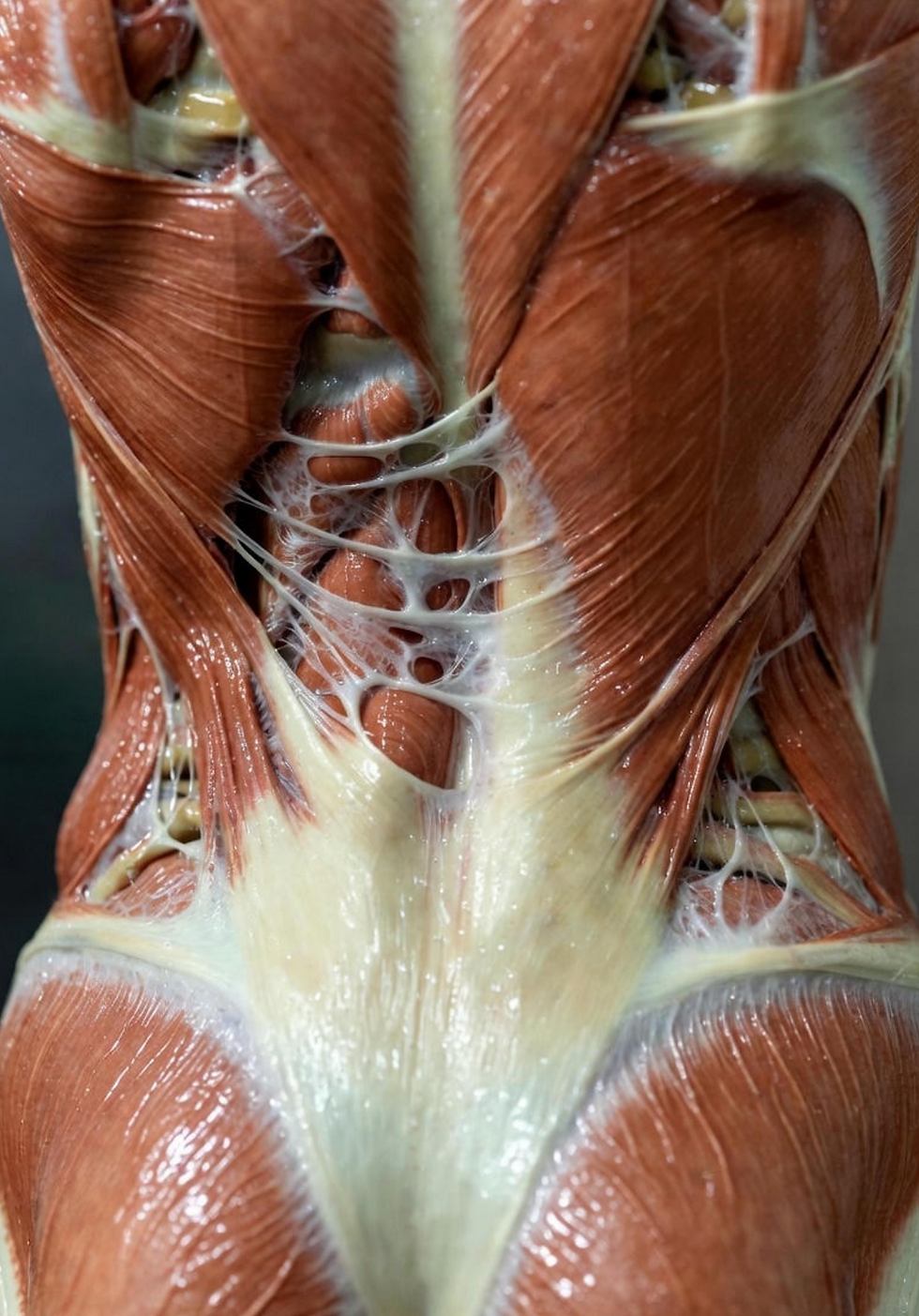
A full-body Anatomy Trains assessment identifies restrictions at the site of pain and in linked areas of the body. Precise Myofascial release frees them. Clients typically reach 80–100% pain-free during this phase, which takes 2-4 weeks.
2. Realign – Prevent Return

Targeted release realigns the skeleton in the Fascial web.
Correct muscles activate properly – no overuse. This creates long-term freedom.
3. Retrain – Empower You (Optional)

Simple postural/balance exercises strengthen the new alignment.
Instead of this homework, many prefer a single maintenance session every 6 months for lifelong postural results.
Why Physology Works for Chronic Conditions
We specialise in:
Fibromyalgia – Widespread Fascial tenderness eases dramatically.
Chronic back pain – Rooted in distant trains.
Sports injuries & long-term pain – Balance prevents recurrence.
Our unique hands-on Fascia release + R3 system = fastest, long lasting pain free results.
Ready for Clarity and Pain Free?
Need Back Pain Treatment or Fibromyalgia Pain Treatment In Bath or Bristol? Book your consultation – understand your pain, reduce it on day one, and follow a clear plan to freedom. Head to our Fibromyalgia Focus or our Back Pain Guide for a deep dive into your symptoms & to start your journey.


Comments